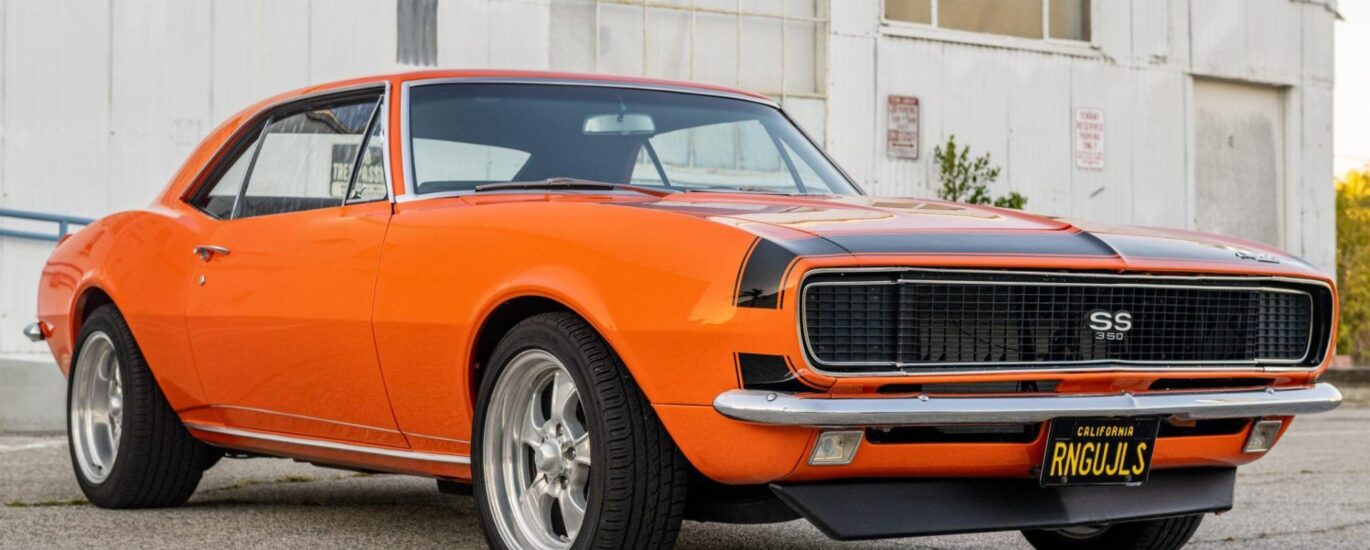
Chevrolet Camaro First Generation (1967–1969): The Birth of a Pony Legend
When Chevrolet introduced the Camaro in the fall of 1966, it wasn’t just unveiling a car—it was firing a shot across the bow of the Ford Mustang. The first-generation Camaro, built from 1967 through 1969, marked GM’s official entry into the pony car war, a battle defined by style, speed, and youthful appeal.
Quick Facts
- Years Produced: 1967–1969
- Body Styles: Coupe and Convertible
- Platform: GM F-body (shared with Pontiac Firebird)
- Engine Options: Inline-6, Small-block V8, Big-block V8
- Performance Packages: RS, SS, Z/28
- Assembly: USA (Ohio & California), also assembled in Switzerland, Venezuela, Peru, Belgium, and the Philippines.
Engineering & Performance
The first-gen Camaro was available with a wide range of powertrains:
- Base Engine: 230 cu in (3.8L) inline-6, 140 hp
- Optional V8s:
- 327, 350, 396 cu in
- Z/28’s 302 cu in V8 for SCCA Trans-Am homologation
- SS’s L78 big-block 396 produced up to 375 hp
Transmissions ranged from 3-speed manuals to the legendary Muncie 4-speed, as well as the Powerglide and Turbo Hydra-Matic automatics.
The Z/28 was an underdog street-legal racer with hidden potential. Although its advertised 290 hp figure seemed tame, it was significantly under-rated to keep insurance costs down.
Special Packages That Defined the Era
RS (Rally Sport)
- Hidden headlights, revised taillights, special trim
- Pure visual drama—style over speed
SS (Super Sport)
- 350 or 396 V8, heavy-duty suspension, striping
- Serious muscle for straight-line speed lovers
Z/28
- Built for Trans-Am racing
- High-revving 302 V8, 4-speed, disc brakes, performance suspension
- Only 602 built in 1967, making it rare and collectible today
Pop Culture Legacy: A Hollywood Star
The first-gen Camaro has long been a cinematic icon:
- Transformers (2007): Bumblebee started life as a 1977 Camaro, but the character’s first appearance was heavily inspired by the original Camaro’s design lines.
- Fast & Furious franchise featured several first-gen Camaros in high-octane chases.
- Better Call Saul: The character Kim Wexler drives a 1969 Camaro, enhancing the show’s vintage aesthetic.
- A Camaro SS paced the 1967 Indy 500, solidifying its performance credibility.
Pros of the First-Gen Camaro
| Strength | Details |
|---|---|
| Iconic Styling | Long hood, short deck—classic pony car proportions |
| V8 Power | Big-block options that rivaled even Corvettes |
| Collector’s Dream | High resale value, especially RS/SS/Z/28 variants |
| Racing Pedigree | The Z/28 was race-ready from the factory |
| Tuning Potential | Easily modifiable with a strong aftermarket ecosystem |
Cons of the First-Gen Camaro
| Weakness | Details |
|---|---|
| Handling (Base Models) | Lacked the chassis refinement of modern sports cars |
| Safety | No airbags, weak crash protection by today’s standards |
| Fuel Economy | Thirsty V8s meant poor MPG ratings |
| Cramped Interiors | Especially in the rear seats for the 2+2 layout |
Comparison with Modern Cars
| Feature | 1967–69 Camaro | Modern Camaro (e.g., 2024 SS) |
|---|---|---|
| Power | Up to 375 hp (gross) | 455 hp (net, 6.2L V8) |
| Tech | AM radio, analog gauges | Touchscreens, Wi-Fi, traction control |
| Handling | Raw and mechanical | Precise, electronically assisted |
| Brakes | Drum (base), disc (Z/28) | 4-wheel Brembo disc standard on SS |
| Comfort | Loud, stiff ride | Tuned suspensions, advanced interiors |
The modern Camaro is objectively superior in performance, safety, and comfort—but it lacks the pure analog thrill of the first-gen models.
Camaro vs Mustang vs Charger (1967–1969)
| Car | Powertrain Range | Styling | Handling | Legacy |
|---|---|---|---|---|
| Camaro | I6 to big-block V8 | Sporty & refined | Best in Z/28 trim | Race + Pop culture |
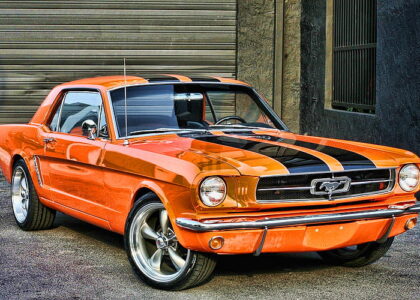
| Mustang | I6 to Boss 429 V8 | More variety | Improved over years | First pony car & icon |
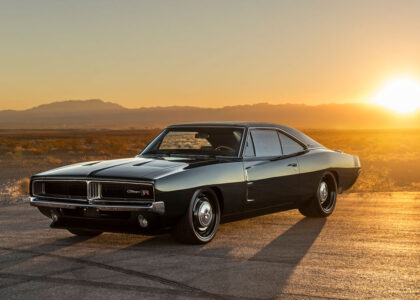
| Charger | V8 only | Muscular & aggressive | Heavier, more drag-oriented | “Dukes of Hazzard”, Fast & Furious |
- The Mustang had the early lead and bigger variety.
- The Camaro fought back with performance and racing credibility.
- The Charger was more of a muscle coupe than a true pony car—bigger, bolder, and often faster in a straight line but less agile.
Conclusion
The first-generation Chevrolet Camaro wasn’t just GM’s answer to the Mustang—it became a symbol of rebellion, speed, and American ingenuity. Whether you’re a purist who loves carburetors and chrome or a modern muscle fan, the 1967–1969 Camaro demands respect.
In a world of modern tech and EVs, the first-gen Camaro reminds us that driving used to be raw, noisy, and gloriously imperfect—and that’s what made it unforgettable.