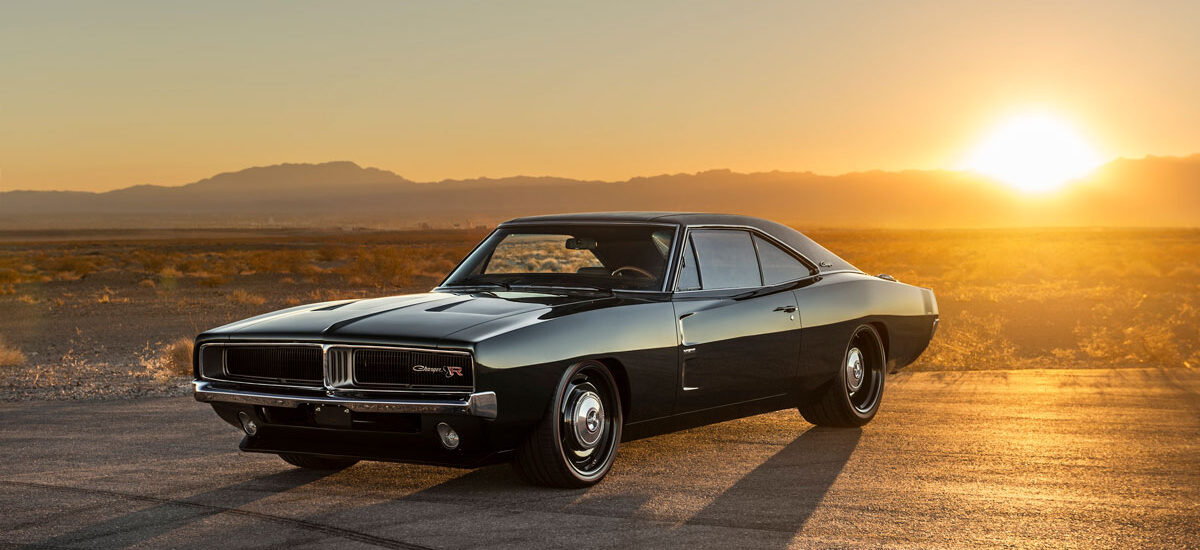
The Muscle Icon That Started It All
As someone who lives and breathes cars, few models captivate my imagination quite like the Dodge Charger. It’s a name that roars through history with the unmistakable rumble of American muscle. While most people know the Charger from movies like Fast & Furious, the story began way back in 1966, with the launch of the first-generation Dodge Charger—a car that combined style, speed, and raw attitude.
Origins & Design
The first Charger rolled out mid-way through the 1966 model year, built on the Chrysler B-body platform, and closely related to the Dodge Coronet. With its fastback roofline, it followed the styling pattern set by the AMC Marlin, giving it a sleek, elongated silhouette that stood out from the crowd.
Unlike the Mustang, which targeted younger buyers, the Charger was aimed at a slightly more mature audience looking for a sporty but substantial ride. It was a mix of muscle car power and personal luxury—something Dodge hoped would hit a sweet spot in the market.
Interior Features
The interior was unlike anything else at the time. The four individual bucket seats and a full-length center console gave it a sporty, cockpit-like feel. Up front, drivers were greeted with race-inspired gauges and a futuristic dashboard design.
One of the car’s most distinctive elements was its hidden headlights set behind a wide, full-grille front fascia. At the back, a seamless “wall-to-wall” taillight gave the Charger an unmistakable signature on the road.
Engine & Performance
Performance was where the Charger truly delivered. The base engine was a 318 cu in (5.2L) V8 with a 3-speed manual, but options climbed steeply. Buyers could choose from a range of powerful upgrades, including:
- 361 cu in (5.9L) V8
- 383 cu in (6.3L) V8
- 426 cu in (7.0L) HEMI V8 – the legendary powerplant producing up to 425 horsepower
The Charger wasn’t just about straight-line speed; it was built for grand touring comfort and road presence.
Pros and Cons of the First-Gen Charger
| Pros | Cons |
|---|---|
| 🔥 Bold and aggressive styling | ❗ Poor rear visibility due to fastback roof |
| 🏁 Wide range of powerful V8 engines | ❌ Limited rear seat space |
| 🎮 Unique interior with 4 bucket seats | ⚠️ High weight affects handling |
| 😎 Hidden headlights and sleek design | 💰 High cost for HEMI models |
| 🕶️ Strong road presence | 📉 Low sales in early years due to styling |
The Rivalry: Dodge Charger vs. Ford Mustang
The launch of the Dodge Charger came just two years after Ford introduced the Mustang in 1964, which kicked off the pony car revolution. While both cars were performance-focused, they represented two different philosophies.
| Category | Dodge Charger (1966–67) | Ford Mustang (1964–67) |
|---|---|---|
| 🧱 Size | Intermediate-sized B-body | Compact pony car |
| 🎯 Target Market | Mature buyers, personal luxury | Younger drivers, affordability & style |
| 🏁 Engine Options | Up to 426 HEMI V8 (425 hp) | Up to 390 cu in V8 (320 hp) |
| 🎨 Styling | Fastback with hidden headlights | Sleek coupe and convertible options |
| 🎮 Interior | 4 bucket seats with full console | Traditional 2+2 seating layout |
| 💸 Starting Price | Higher than Mustang | More affordable and customizable |
While the Mustang was more affordable and sold in huge numbers, the Charger countered with brute power and bold luxury styling. However, some critics felt Dodge missed the mark trying to turn a mid-sized platform into a pony car competitor. The Mustang’s success may have outshined the Charger in sales, but the Charger’s performance and style earned it a loyal following—especially once the HEMI engines entered the mix.
Later, as the Charger evolved in the 1968 model year with more aggressive styling, the rivalry would heat up even more and take center stage in movies, drag strips, and garages across America.
First-Gen Charger vs. Modern Dodge Chargers
| Feature | 1966–67 Charger | Modern Charger (2020s) |
|---|---|---|
| 🏎️ Performance | Up to 425 hp (HEMI V8) | Up to 807 hp (Hellcat Redeye) |
| 🎮 Interior | Minimalist, analog gauges | Digital cluster, advanced infotainment |
| 🧰 Safety | Basic lap belts, no airbags | ABS, airbags, lane assist, etc. |
| 🛠️ Tech | Manual controls, AM radio | Touchscreens, Apple CarPlay, etc. |
| 👀 Styling | Fastback with hidden headlights | Muscle car meets modern aggression |
While the original Charger was raw and mechanical, modern Chargers offer refinement, safety, and tech—but some argue they lack the pure muscle spirit of the original.
🎬 Pop Culture & Film Appearances
The Dodge Charger has become a pop culture icon, and much of that credit goes to Hollywood. The 1968 Charger, very similar in design to the ’66–’67, starred in:
- The Fast and the Furious (2001) – Dom Toretto’s black Charger is a legend in the series, famously powered by a supercharged HEMI.
- Fast & Furious franchise – Variants of the Charger reappear throughout the films, becoming symbolic of raw power and family legacy.
- Bullitt (1968) – The famous chase scene between a Charger and Steve McQueen’s Mustang set a new standard for car action in movies.
- The Dukes of Hazzard – Featured a customized orange 1969 Dodge Charger, nicknamed “General Lee.”
While not every appearance used the exact ’66 or ’67 model, the first-gen Charger laid the groundwork for what the model would become—an American icon loved by millions.
Final Thoughts from M. Sannan
The first-generation Dodge Charger may not have broken sales records, but it made a statement that echoes to this day. It was bold, experimental, and unapologetically American. For car enthusiasts like myself, it’s a reminder of a time when style and muscle ruled the roads.
I hope you enjoyed this deep dive into one of Dodge’s most legendary machines. Stay tuned to my blog for more classic car histories, muscle car reviews, and comparisons to modern machines. If you love cars as much as I do, you’re in the right place.
— M. Sannan
Car Enthusiast | Muscle Car Blogger | Automotive Historian